Hard water is common across Los Angeles, and how hard it is depends on which water source reaches your street. A local plumber can test your water, explain whether a softener makes sense and install or repair one. Call the number on this page to be connected with a local plumber in Los Angeles.
Hard water in Los Angeles is not the same from one neighborhood to the next. LADWP blends water from the Los Angeles Aqueduct, imported Metropolitan Water District supplies, local groundwater and recycled water, and the mix changes by area. Aqueduct water is on the softer side, while water from the Weymouth and Diemer treatment plants is much harder. Two homes a few miles apart can have noticeably different scale buildup.
Signs your water is working against your plumbing
White crust around faucet aerators and showerheads, cloudy spots on dishes, soap that will not lather and a water heater that rumbles are the usual clues. Scale also coats the inside of tanks and heating elements, which is one reason water heater repair calls often trace back to mineral buildup. Your LADWP water quality report lists hardness, and your water bill will tell you which system serves your address.
What a plumber does here
A plumber can test the hardness at your tap, look at your water heater and fixtures for scale damage and talk through the options. Those usually include a salt-based softener on the main line, a salt-free conditioner that changes how minerals behave without removing them, or simply a point-of-use filter for the kitchen. Each has tradeoffs in maintenance, space and what it actually does to your water. A plumber who works with these systems will not push the biggest unit if a smaller fix covers your problem.
Installation in older Los Angeles homes
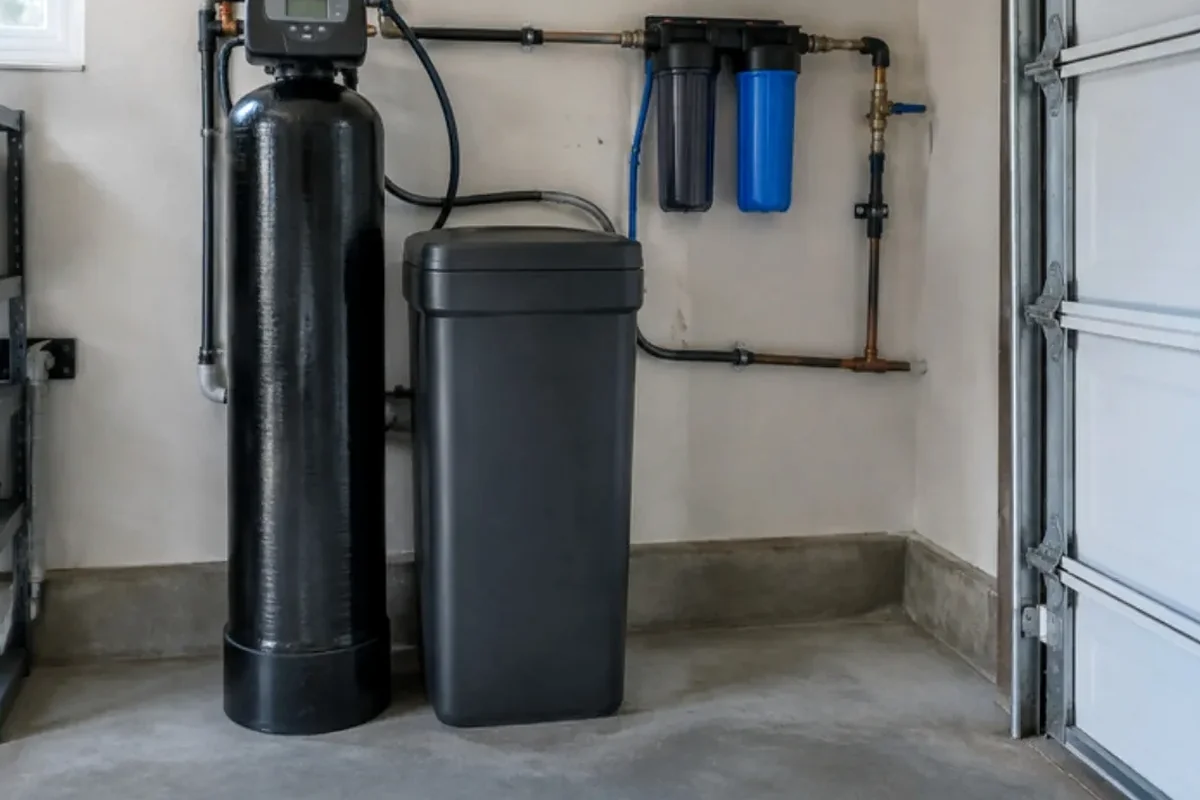
With a median home age near 1964 and roughly 72 percent of the city built before 1980, many houses still have galvanized steel supply lines or aging copper. Galvanized pipe that is already narrowed by corrosion can limit flow through a new softener, so the plumber may suggest checking the main line first. In many homes the unit goes in a garage or an exterior side yard, and it needs a nearby drain, a power outlet and a clear path for the brine discharge. Rules on discharging regenerant water can vary, so ask the plumber what applies to your address.
Softeners are plumbing work that may need a permit, depending on the scope. In the City of Los Angeles, permits come from LADBS through its Development Services Centers. Other cities and unincorporated county areas use their own building departments. For work of $1,000 or more in labor and materials, California requires a contractor who holds a CSLB license, and you can check the license on the CSLB site before work begins.
Soft water is not for every tap
Many people keep one cold line unsoftened for drinking and for watering plants. A plumber can set that up when the system goes in. Pairing a softener with a plumbing inspection is a sensible way to catch worn valves and corroded fittings before they fail.
Water Softener questions from Los Angeles homeowners
Is Los Angeles water hard?
Do I need a softener or just a filter?
Where does a water softener go in a Los Angeles home?
Does installing a softener need a permit?
Related plumbing services in Los Angeles
Helpful guides
Water Softeners & Filtration in nearby cities and towns
Los Angeles County
Orange County
Ventura County
Sources
Last updated: